In-Building Wireless (IBW)

Reliable indoor coverage for buildings that can’t afford dead zones

From Connectivity to Compliance: Why Every Building Needs a Wireless Plan

Indoor environments account for the majority of mobile data traffic, yet they remain the hardest place to deliver consistent coverage. As buildings grow larger and more complex, indoor coverage gaps, weak signal levels, poor voice quality, low data performance, and network congestion in high-density areas become increasingly common. Supporting multiple carriers in the same building traditionally means duplicating infrastructure for each one, while inconsistent handover between indoor and outdoor networks further degrades the user experience. Fire and life-safety codes have reinforced this shift, increasingly requiring dedicated, code-compliant radio coverage for emergency responders throughout a building.

Three shifts changing how buildings approach coverage

Coverage is now a planning requirement, not an afterthought

increasingly account for indoor wireless coverage at the design stage, instead of retrofitting it after tenants complain.

Multiple carriers need one shared infrastructure

Neutral-host architectures let several operators share a single system, instead of each building a separate one.

Life-safety compliance is non-negotiable

Fire codes in most jurisdictions require dedicated, code-compliant radio coverage for emergency responders, independent of commercial cellular coverage.

Coverage built around how your building is used

Our IBW solutions address these challenges through purpose-built indoor wireless architectures designed around the specific requirements of each site.

Small Cells & Femtocells

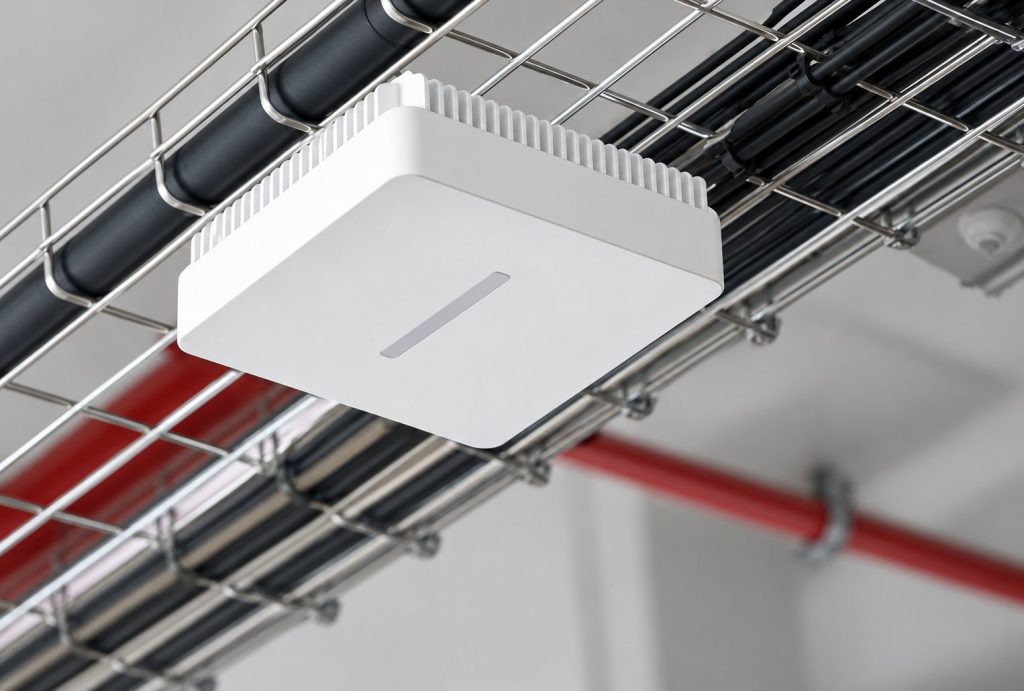
Compact, self-contained units for targeted coverage and capacity. Small cells suit high-density zones like lobbies and conference centers; femtocells handle localized, small-scale indoor coverage.

Indoor RAN Solutions

Purpose-built indoor radio infrastructure supporting modern LTE and 5G deployments, designed for environments where DAS or small cells alone aren’t sufficient.

Multi-Operator Indoor Networks

A single shared infrastructure supporting multiple carriers simultaneously. Neutral-host architectures avoid the cost and complexity of separate systems per operator.

Distributed Antenna Systems (DAS)

Passive or active DAS extends a single signal source across multiple antennas, suited to large or structurally complex buildings needing broad, consistent coverage. Supports 4G/LTE and 5G across multiple frequency bands.

Why Telecom Aryan for In-Building Wireless

We handle in-building wireless end-to-end: RF site assessment, design, carrier coordination, installation, and ongoing support, under flexible ownership models including direct ownership, managed service, and carrier-funded deployment. Our deployments span hospitals, corporate campuses, transit hubs, and commercial venues.

Related Solutions

Mobile Private Networks

dedicated wireless networks for sites requiring full network control.

Fixed Wireless Access (FWA)

high-speed broadband delivered wirelessly.

Wi-Fi Offloading

raffic management that shifts mobile data onto Wi-Fi in high-density environments.